Just picture yourself sitting by the fireplace, sipping a hot cocoa with your family, listening to those timeless classic Christmas carols while enjoying the warmth and comfort of your beautifully decorated house. The tree sparkles with the lights, and the sweet aromas of apple, cinnamon, cloves and oranges permeate the air from all the scented candles and fragrant potpourri you carefully selected for the occasion. The presents are laid out around the tree, and the table is set up for a nice supper. It is Christmas.
It is Christmas, yet a nagging melancholy feeling, from the depths of our inner world, keeps asking for our attention as if telling us that something is missing. The most joyous of times also reveals to be the most dreaded and the most stress-causing of all. No wonder so many people are quick to express vehemently their dislike for the second half of December. No Christmas lights, snow, glitter, sweater or delicious food are able to end the anxiety of the holidays.
We seem to be missing something important in the middle of all the preparations. Wasn’t the food cooked to perfection? Wasn’t everyone included in the gift list? Aren’t the lights blinking and the decorations in place? We can’t quite figure out what could possibly be missing since it took hours of anxiety and stress to make it all perfect this time.
Ten years ago, on December 26th, a massive undersea earthquake in the Indian Ocean caused a catastrophic tsunami that hit Indonesia, Sri Lanka, India and Thailand. This was one of the deadliest natural disasters in recorded history. It took the lives of over 200,000 people. Families across the globe were still basking in the joyous atmosphere of the lights, gifts and the spirit of Christmas. In a few days, the world would get festive again to welcome the New Year. It just did not make any sense. How can events like that take place during worldwide celebrations? How can people die during the holidays? They just do. And, in this case, death happened in a large-scale. The world got together to help those who needed at that moment. But, the world also got together, each living individual with their families and friends, and celebrated. While we ate, and danced and laughed and did our count-down, thousands searched in the dark for their loved ones; thousands had gone missing, thousands were dead. All over the world, TV screens broadcast images of fireworks and celebrations interspersed with images of absolute devastation and suffering in those areas hit by the tsunami.
Fast-forward ten years to where we are now and our celebrations continue to repeat a pattern that seems to reveal some level of incongruity with the reality of the world we live in. The news are still grim on our state-of-the-art digital TV screens: natural disasters are still beckoning our attention to environmental issues, and social injustice and violence still increase in unprecedented and wide-ranging degrees. We continue to shop and get busy for the holidays, and life goes on. We maintain this frenzy as if we were in a trance-like state induced by some potent drug that forces us to behave with outbursts of euphoria fused with a latent and well-concealed forlorn apathy for the celebration we have been anticipating all along. We are alone with ourselves, and we turn to gadgets and things galore to fill in that space between ourselves and others. But, we miss the connection.
We only need to look around and pay attention and be with the world, and be with each other. We need to pay attention and see our own ways and how we also are a part of it all. How we contribute to the disharmony and instability. We are not simply characters in a story, but powerful co-creators of the reality we dream of becoming. We need to stop for a minute to reboot our lives and re-wire our way of perceiving reality. We need to reevaluate our choices, our decisions and our answers. We need to change our ways every day we wake up in the morning. That’s our opportunity to make change happen for ourselves and for others. It’s a constant process of death and rebirth that we go through every day. We’ve got to let go of the old habits and replace them with something different, and if that still doesn’t quite work, we have the following day, and the day after the following, to keep on making changes and trying a new approach. To me, that is the spirit of life. We should not be afraid to try.
How many times we act or respond with impatience, anger, indifference, envy, and hatred towards ourselves or another? At times, we are not even completely aware, except for the fact that we leave a bit heavy after an encounter with another person, closely-related or not. At the end of the day, as we retire to sleep, we need only a few minutes with ourselves to review the day and the feelings and emotions that got triggered. This is our moment to break the pattern, delete the template, and redesign a new way to respond the next day. No self-pity, guilt or regret, just acknowledgment, and a rewiring of our brains with awareness are needed. It’s an ongoing process for all of us, and we are far from finished. That’s the beauty of it.
In this world, in our lives, we all have freedom of choice. We can choose. It’s such an amazing gift, but one that is also replete with anxiety-provoking wild imaginings. I might be wrong on this, but we seem to be the only species that are able to consciously decide to live in one minute, or end our own lives in the next. We create our stories and we believe them. Imagine over 7 billion people in the world with the possibility of creating their own stories about the reality of life as they experience it; over 7 billion different perspectives. No wonder we cannot understand one another. We only see the differences and we feel afraid to reach out and get closer. It is a survival mechanism, pure instinct. We need a leap of faith here. We need to trust, to look in the eyes of the one next to us with kindness, for the burden we all carry is exhausting. We all respond to pain and love the same way. We need one another to survive.
Maybe it’s time we tried something different for the holidays. Maybe we should just try something simple instead. We can still eat and celebrate and be merry, but instead of focusing on the preparations and the presents we should just look around at each other and really listen. We should smile and be grateful in our hearts that we are alive and that we have each other. We can always change and we are certainly trying our best every day. There are no formulas or handbooks. We just follow the rhythm of this dance. That’s the spirit of Christmas. That’s the spirit of the holiday season. That’s the spirit of Life.
The power of music, every so often, astonishes me in its capacity to make us transcend reality and pull us into the depths of our souls, our inner world.
I am sure you must have been often enthralled by a song or piece of music that brought you back some good memories from the past or a recent event in your life. Or, perhaps, the music triggered in you a negative experience you had before, and you felt the urge to rush to the controls of your computer or radio, or grab your iPod to turn it off, or switch that song. Such is the power of music. It conjures up spirits and performs magic.
I am here to talk about my experience with Morton Feldman’s music and its intrinsic ability, in my opinion, to carry us along seemingly incongruous musical patterns that make up the musical architecture of his pieces.
Feldman was born in 1926 in Brooklyn. His parents were Russian-Jewish immigrants from Kiev. He is considered to be one of the pioneers of “indeterminate music”, alongside John Cage, Earle Brown and Christian Wolff. Now, indeterminate music is one of those vague terms that open up a field of interpretation. Most everyone has been exposed to this type of music one way or another. The interesting thing is that if this type of music is part of a scene in a movie or theatre play, or maybe a multi-media installation work, most people are actually drawn to its subjective and stylistic freedom and consider it “cool”. However, when approached in isolation for what it is, a lot of people feel put off by it and even question its compositional qualities. Are we somehow pre-determined to be afraid to open up our minds and embrace what steers away from the norm? Are we bound to suffer and accept only what follows a familiar territory, and reject the element of diversion and surprise? We seem to always complain about boredom and repetition, but can we truly embrace and be one with a new experience without reservations and preconceived ideas of what should be instead, according to what we are used to, when faced with something new and fresh?
Indeterminate music, and in this case, Feldman’s work, has the ability to break through our pre-conceived notions and liberate us from static perceptions of reality. In this type of music a specific piece can be performed in different ways according to John Cage. A number of other techniques are used in indeterminate music like polyrhythm, polytonality, aleatoric elements and the list goes on, but it’s really not my interest to investigate these technicalities here. I am solely interested in passing along my experience with Feldman’s music, and maybe, try and motivate others to be open enough to appreciate and enjoy the outstanding quality of his work.
On a more subjective level, Feldman’s music breaks barriers and is able to pierce through our expectations, thus liberating us from static perceptions of reality. It works in the same way that the abstract expressionists did. By offering a proposed motif, Feldman goes on a bit further, playing with our pre-conceived notions of what music should sound like by introducing a series of ambiguous components using repetition, modulation, differences in pitch, ascending and descending scales, timbre, loudness and duration, varying tone quality within a small group of different instruments which display a subtle, unifying theme in the spectrum of colors of his compositions. It all seems random and simplistic to the ear, but it is all ineffably part of a precise and methodic continuum. The character of indeterminacy, however, imbues this kind of music with a fresh and immediate quality. Artists like Feldman, Cage, Brown and others mapped out a musical landscape that enabled experimentation and exploration of psychoacoustics which studies our responses to the perception of sound, thus setting the artists free from the constraints of traditional musical syntax as the only way to make music.
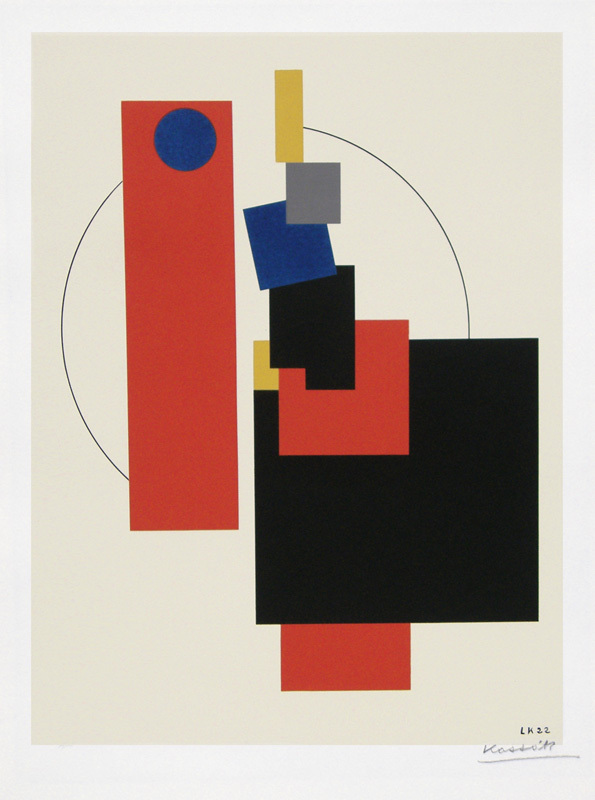
One should experience Feldman as one approaches Rothko, Lyonel Feininger, Oskar Schlemmer, Moholy-Nagy, Lajos Kassák, Kadinsky or Pollock, to name just a few names – among many – who broke away with tradition and dared to experiment with new ways of exploring reality; artists who broke the barrier of sound and color, literally.
The spiritual dimension these artists opened up, paved the way for us to be able to see through the illusion of solidity and immutability, and understand the interconnection of all elements. Their work challenges our own perception and understanding of what is real. We find ourselves turning back our heads to look and listen again, a second, third, fourth and many times over. We realize that it’s all moving and changing right before our eyes and ears, just like ourselves, just like our emotions, just like life. Each time reality is deconstructed, and presented in different perspectives, we start again from that first simple note, that first stroke, that first line or dot on a blank canvas.
Music and painting are more intrinsic to each other than some people might think. Colors have sounds and music has images. It provides an ecstatic experience that penetrates the realm of the spirit. It’s up to each one of us to come to terms with our difficulties in accepting something without the need to define it according to a specific model or mold we have been used to before. It’s time we experienced what is for what it’s worth, without labeling or comparing. We are all so lucky these artists are inviting us to experience that again and again – each time we listen, each time we look.
1- Morton Feldman – Piano And String Quartet (1985) (uploaded on YouTube by Ton de Kruyff)
2 – Jackson Pollock, Number 1, 1950 (Lavender Mist),1950, National Gallery of Art, Ailsa Mellon Bruce Fund, 1976.37.1
3 – Lyonel Feininger, Bird Cloud, oil painting 3 x 3.5 cm (1 3/16 x 1 3/8 in.) – Harvard Art Museums/Busch-Reisinger Museum, Gift of T. Lux Feininger – Object number: BRLF.1019.98
4 – Lajos Kassak – Bilderarchitectur Kassak – 19 1/4×141/4″ image (screenprint from portfolio of ten images)
5 – Mark Rothko (“Multiform”)
6 – László Moholy-Nagy – Composition Z VIII – 1924 114×132 cm
Matisse was born in 1869 and died at the age of 84, leaving a body of work which both shaped and changed the history of art. Despite his conservative appearance, Matisse fully incorporated the modern spirit of the new century. In his anguished but unwavering quest, the artist understood the use of light and color and went beyond simplistic representations of reality, making use of color to express a state of mind towards his subject, celebrating life and the joy found in nature and painting.
This discussion proposes to look at Matisse’s “Bather’, 1909 – as an attempt to study and get closer to different artists and their work.
At first glance, the painting “Bather” brings to mind another, more famous work, entitled “The Dance I” (also by Matisse) from the same time. Both paintings present similar hues and treatment of the human form, almost as if the characters had been taken from the same landscape.
Matisse’s “Bather” shows one single element; it’s almost as if it were a detail from a larger composition. What we see is the image of a boy entering an unidentified body of water; it could be a lake, a river or the sea, we are simply left only with what the artist wants us to observe. Our eyes are forced to marvel at the naked body of this young man which occupies the center of the composition and takes up the entire height of the canvas. A deep blue background contrasts dramatically with the luminous nakedness of the boy. We see his body in an almost 3/4 view from the back. There are no facial features on this representation which stresses the idea that the painter is not concerned with the individual per se, but with the experience he had, and wanted to convey to us. Matisse’s justly praised ability with color is clearly observed here. There are basically two colors pointing to physical elements of reality: the blue covering most of the space on the canvas can be experienced as both the water and the sky, and the hues of pink and yellow gives us the iridescent presence of the sun reflected on the boys’ body. Adopting one solid, deep blue background, Matisse had to establish a point of contact between the legs of the boy and the water itself so that the theme could be easily perceived.
There is a playful mood to this composition that is captured by the artist in its simple and direct approach to the subject. Even though the painter does not give us much information, we get the full atmosphere of the activity. The movement of the water current on the boy’s legs offering resistance as he moves his body in the water anticipates the utter joy of the moment he will dive and swim. Even the scuff marks of previous lines are left by the artist on purpose to accentuate the idea of movement and constant activity.
Matisse never hides the presence of the paint or previous drawing lines. It is part of the composition and he does not hide the fact that it is paint and color organized in such a way to invoke a certain mood on the viewer. The hard black lines that make up the contours of the boy’s body add substance and volume to the boy’s figure making it palpable and pleasing in its exuberance and youth. There’s a hint of eroticism in watching someone bathing naked, but here, the playful atmosphere almost serves as an invitation to join the boy in what is, definitely, a pleasant activity that echoes in the back of our minds and beckons us into the sweet memories of time spent in similar outdoor indulgences. It is a simple portrait of a joyous moment captured in time. We can certainly relate to the feeling of the water touching our skin and the immense feelings of joy while playing in the water without worries or concerns.
Usually when we think of a painting we think of a landscape, one or more people inserted in a specific detailed background or a portrait; in the “Bather” the focus is solely on the individual completely absorbed in what he is doing and totally unaware of our presence, almost as if it were a sculpture, and because it isn’t, we lack the necessary vantage point to observe it from all angles. Even if we are given a partial view of what would have been the boy’s facial features, we are left, instead, with a sort of blank slate for a face. Matisse does not want us to miss what really matters in his piece. It is the mood, the feeling, the atmosphere evoked far in the deepest recesses of our memories, which can be triggered by the choices of color, subject matter and compositional styles that he devised in order to invite us to tap into emotional states through new ways of perceiving and apprehending reality, completely opening the doors to all possibilities.
Matisse as an artist has the ability to capture moments, like these, in a profound and meditative manner. He commands us to stop and pay attention to detail with a Zen-like attitude, looking at things as if we were doing it for the first time, and he does this through his masterful use of color. It is a feast for the eyes, an opportunity to let ourselves be taken by the magic of details, unexpected colors combinations and exotic flavors in an attempt to show us that life is bursting with new experiences all around us if we can only let go of preconceived notions of how we should see. Matisse is the wizard who tells us we can reinvent ourselves, look at things with the eyes of a child, embark on a new adventure each day, and perceive different forms of reality at any time, at any place – if only we are willing to try. He creates a space of experimentation and dare us to bathe ourselves anew.
It’s 5:30 on a wet Friday afternoon in spring. I’ve been driving around in the parking lot of the Stonestown Shopping Center for about four minutes, looking for an empty space. This is my second mall visit on a list of three. Yesterday, I hung out for a while at the San Francisco Shopping Center on Market Street. The Serramonte mall will be my next stop. Casinos and shopping centers have always given me a headache by the time I was ready to leave. But that didn’t stop me from having my share of visits in the past. The very essence of the mall gives its natural raison d’être. The place is a shopping compound, a community market, a year-round fair where the inhabitants of a city, town or village congregate for a social experience. Since the days of yore, markets and fairs have provided their members both with products for purchase or exchange, and an environment for social interaction and entertainment. For this reason, the mall today fulfills its ancestral purpose within the landscape of the culture and the economical system that originated it.
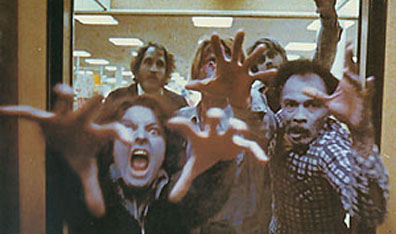
As we enter the mall, we feel comfortable with its surroundings. Everything pleases the eye. Products beckon you into their world like goblins leading you astray. It’s a perfect atmosphere that invites you to forget worries, problems and the world outside. According to William Severini Kowinski in his “The Malling of America”, these shopping structures present a standardized organization in the spacial composition of its architectural elements and business facilities. Talking about Monroeville Mall in Pennsylvania – where “Dawn of the Dead” was shot – Kowinski notes: “But it was only after my travels were completed that I saw Monroeville Mall as something of a model for malls across America. It isn’t exactly average – it’s more that Monroeville Mall is the essential mall. It has a couple of big department stores and a reasonable selection of shops. It has all the typical mall stuff – the bathroom supply store, the fast-food dispensaries – but it also has a good French bakery and café, and a pleasant Italian restaurant.” (235) These defining characteristics can easily be observed in any mall we have been.
I had never seen George Romero’s 1978 classic “Dawn of the Dead” before, but as a movie buff, I couldn’t let go of the opportunity. The movie is more like a sociological sci-fi piece. Throughout, Romero sews in his social statements about consumerism and individual alienation. The corny treatment to the movie, places it in the cult genre. Like Barbarella, fighting Duran Duran to save the universe from evil in Roger Vadim’s kitsch scenario, George Romero paints these odd tableaux that play like a tragicomedy in front of our entertained eyes.
The glass doors of the mall, with its metallic golden handles, open into an optimum space. The perfumed scent lingering in the air, the glossy cleanliness of the marble floors, the sophistication of advertising strategies, and the never-ending proliferation of products, goodies and objects that galvanize our nerve system and arouse our coveting nature, all merge together to establish an ongoing communication with the public. The stores and the merchandise interact with us in a mutual conversation. The mall talks to us. The language used is based on the marketing goals devised by the mall developers. Every detail is strategically planned with profit in mind. The mall is essentially a powerful communications medium to the service of potent corporation groups. It seduces us into the semiotic glow of its lights and instructs us with gems of consumerist advice. Every particular element in its composition harbors a pristine relationship between production and the distribution of goods in a competitive free market. In the shopping centers that I visited, all the same basic structure is present. The stores are always the same; same kind of products and services, same electronics and technology, the same discerning presence of the media, and the same dazzled look in the faces of the ones who go there. It’s a set-up organized by the system and the culture it represents. In our experience, it’s the shooting of the corporate film that’s playing in America. The model is so massively strong that threatens to establish itself as an absolute reality for the globe. It’s appalling to find in the cities of third-world countries – where thousands of homeless people are starving in the streets – the sleek interiors of shopping centers sprawling around a slummy and destitute landscape. These are, undoubtedly, ramifications of neo-colonialism in our days.
Roaming the mall, I soon let myself be lured by the artifice, the trick, the lie. I entered the movie stores and examined the titles. I ended up purchasing two movies for myself. Interestingly, when I approached the cash register to pay for the articles, the clerk asked me fast-paced, memorized questions about membership to the store, services, and if I wanted to earn a free one-year subscription to Entertainment Weekly magazine. It’s all about sales – how much more revealing can that be? All the other movie/cd stores were basically the same. There is no paucity of the mainstream, blockbuster Hollywood fare. Some classic items like “The Cabinet of Dr. Caligari” – a 1919 film by German filmmaker Robert Wiene – can surprisingly be found on the shelves. This movie was made under the aesthetic orientation of the expressionist movement in the arts and literature in vogue in Europe at that time. We should never underestimate the odd places where art may proliferate within a capitalist system. Everything can be appropriated and turned into a product. The good news are: in the domain of the mall, classic pieces like the one above is usually ¼ of its price, but the number of such items is definitely irrelevant in the context of the big picture. The star is still the big productions, and the merchandise tagged along to entertain our lives.
As I was saying, it’s not difficult to succumb to our consumer inclinations. We’ve been taught like that by the media in our culture. I shopped, I ate, and I had a good time with my friends who accompanied me in this experience. However, there is a sense of emptiness and depressing void if we think of compulsively visiting the mall as the focus for our social activities. It’s an unsubstantial world; a realm deprived of relevance to our lives. It’s the stage where the corporate-owned media materialize their news and entertainment fabrications. That reminds us of “The Peek-a-Boo World” concocted by Neil Postman in his narrative about the information and the media: “Together, this ensemble of electronic techniques called into being a new world – a peek-a-boo world, where now this event, now that, pops into view for a moment, then vanishes again. It is a world without much coherence or sense; a world that does not ask us, indeed, does not permit us to do anything; a world that is, like the child’s game of peek-a-boo, entirely self-contained. But like peek-a-boo, it is also endlessly entertaining.” (358)
Notwithstanding, the malls I visited fell short to my expectations. I did notice a profuse number of examples tying the mall experience with that of the media. Products were in one way or another related to movies or television programs familiar to all. Spongebob and his friends, Rugrats, Blues Clues, Steve Irwin, the Australian Crocodile Hunter, to name only a few, have engendered an endless list of toys and related replicas of their shows’ counterparts. However, the marketing strategy reflected a dearth in number, quality and novelty in relation to the present moment. I did not see one single advertising for the hurricane of summer movie releases that are about to saturate the market. I noticed only one movie, “Two weeks Notice” with Hugh Grant and Sandra Bullock that announced its availability on VHS and DVD formats. The poster read: “The perfect gift for mother’s day”. I might be wrong, but I reckon the market activity could be more efficient. Nevertheless, other related marketer tie-ins such as the movie “The Hulk” and the beverage Mountain Dew, and “X2: X-Men United” and Dr. Pepper are a conspicuous presence on the companies’ packages and cups. Most of the time we usually take these details for granted and fail to identify the marketing game at play.
During my entire experience in the malls, I could not help relating to Romero’s film “Dawn of the Dead” – the scenes were still very fresh in my mind. At one time, I stopped in front of those familiar free car giveaways (they’re still part of the scenery) and pictured myself in Romero’s film, sometimes as a zombie, and other times, still alive, and battling the disfigured dead that wandered the mall after my life. The connections between the zombie consumers and the environment of the mall within the scope of a horror film, and the parallel structure with our real lives confined in a similar vicious system, bring to life an eerie symbolism that haunts the spectator in every visit to the mall. Romero has certainly made his point.
What’s so fascinating about the mall? What’s the nature of its bait? The crowd that visits the mall – ourselves – does so leisurely and aimlessly. It’s not a place to haste, but rather to bask in its obfuscating glare. We’re supposed to feel comfortable, entertain ourselves and go shopping. It’s the stage where big-name companies converge to solidify a mutually benefiting relationship that originates in the media. Movies and television, supported by a super-structure that outlines the physical landscape of a capitalist society, shape our view of the world. The shopping center is the last part in the dialectic process of distribution of products. It’s the display arena where we can fulfill our desires.
The mall is an intrinsic element in the topography of America. America is a vast country. Its distances are ingeniously covered by an interlinked system of highways. The malls spread on the national terrain like linking dots forming the blueprint for the personality of the economical system – its ethics, its moral codes, its idiosyncrasies. Huge, sparkling trucks cross the country every night to feed the nation with an assortment of fake ambrosia – tasteless nectar that takes its toll by smidgens. They carry the products that whet our desires. The highways are like arteries that nourish the national organism. The country is a breathing entity, a live wire of information and freight transportation. The malls of America have taken the task of unifying the country. The unification, however, results in a harmful cultural uniformity that stifles the lives of its citizens. We become mere automatons following a predetermined sequence of consumerist instructions subliminally encrypted in our brains.
The shopping mall is a seductively sanctioned space for the practice of peddling. Corridors of business establishments outline our path. In the middle of the halls, business kiosks proliferate, selling anything from candy, hideously tacky glass sculptures, and jewelry, to flashing cell phone accessories and Tupperware paraphernalia. (It’s interesting to see that Tupperware still sells big time – what a vision!) All these business clusters operate through the same standard language codified as means of consumption. Everything has a marketable appearance and communicates with us. Advertising is mainly focused on playing with our desires. It zeroes in on our instinctive drives, our need for comfort and safety; our fear of deprivation and loss. That’s how the media makes use of our psychological dispositions to manipulate expected marketing responses. The media itself is a product in the mall. We are invited to own it. Electronics, movies and related merchandise congregate to establish a familiarity with the universe we experience on television and on the movies. Our lives resemble a shadow projected on the screens of multi-movie complexes conveniently located around the mall. Interacting with the mall is, therefore, proportional to the interaction established with the world conjured up by the media and stored in the recesses of our memory. Whose lives are we living?
In his “The Malling of America”, Kowinski is not afraid to picture a future where the spirit of America is turned itself into a product. If that happens, how much longer will the survivors in George Romero’s “Dawn of the Dead” last? Kowinski’s essay inspired a new horror flick coming soon to a theater near you: “The Mauling of America”. Now, this is a nasty film. It’s one in which the spirit of a nation is savagely cut asunder. Are we willing to spend our dollar?
______________________________________________
Works cited:
Kowinski, William Severini. “The Malling of America – An Inside Look at the Great Consumer Paradise”. Media Journal: reading and writing about popular culture . Eds. Joseph Harris, Jay Rosen and Gary Calpas. 2nd ed. Needham Heights, MA: Allyn & Bacon, 1999.
Postman, Neal. “The Peek-a-Boo World”. Media Journal: reading and writing about popular culture . Eds. Joseph Harris, Jay Rosen and Gary Calpas. 2nd ed. Needham Heights, MA: Allyn & Bacon, 1999.
For almost two decades, the city of Gerloch, in the Nevada Desert, has witnessed an annual pilgrimage of thousands of people. They come together – for one week – to bring to life an alternative social enclave known as Black Rock City. This festival takes place in the last week of August, and reaches its zenith, over Labor Day weekend, with a celebration of fire denominated as Burning Man. Black Rock City is the name of this temporary community which materializes in the middle of Black Rock Desert, near the city of Gerloch, in North Nevada.
The Burning Man Festival is a massive social settlement supported by a solid urban infrastructure that dissipates itself when the week is over. During the other weeks of the year, this transitory experiment in alternative community breathes through the hearts and minds of those who experienced, like a paradigmatic imprint of the social essence that brings forth the birth and function of a community. To the inhabitants of Gerloch, this symbiotic relationship has given an opportunity for profound social interaction with an array of diversified individuals and their life stories passing through the city in their annual caravan. It’s an exchange of information among distant worlds; a celebration of culture. It’s information technology in action.
Experiments in social communities, like the Burning Man, have been present in our culture since individuals, within a dominant society, were faced with oppression and social control. The provisional character of such uprisings against conformity reveal quite an ominous fate. Philosopher and poet Hakim Bey mentions the transitoriness of these communities in his anarchist essay “The Temporary Autonomous Zone – TAZ”. “The TAZ is like an uprising which does not engage directly with the State, a guerilla operation which liberates an area (of land, of time, of imagination) and then dissolves itself to re-form elsewhere/elsewhen, before the state can crush it.” (101) Another quote from Bey’s essay confirms the same idea: “Like festivals, uprisings cannot happen every day – otherwise they would not be non-ordinary.” (100) Had the community a longer life-span, the System would, voraciously, swallow it down, and impregnate it with the same operating ideology which served as the triggering point of active confrontation.
Conversely, the World Wide Web has engendered a prodigious amount of data and virtual spaces that beckons all of us into the simulacrum of human experience. The net is a highly marketable place. The globalization of the internet resulted in a proliferation of net tools and services. Among a large assortment of services, chat rooms are simply the most peculiar. Chat Rooms are public spaces where people can chat with other people online. Like the Burning Man festival, chat rooms are temporary social enclaves that bring people together in the interstices of society. The most common chat types are: Internet Relay Chat or IRC, Web Chat, and Instant Messenger (like ICQ, AOL, Yahoo! and MSN Messengers). The social character of the Chat Rooms (hereafter CR) has given people, from all over the world, the capacity to communicate with each other in various levels of intimacy, fittingly consistent with the form and characteristics of the medium. The virtual domain of the CR colors and motivates the types of conversations, and consequent behavior of the individuals interacting. “Comuniteks”, like IRC,materializes social environments on the net.
A CR is a safe place for social exposure. The chatter is most always privately installed in the comfort of his/her home. All alone, the person lets go of initial inhibitions, and, successfully, interacts with other people, forming friendships which, most often, fail to make the cross into actual life. Although the web cams entered the scene and made things more convoluted to the users of the matrix, the anonymous experience of the CR provides the seminal impulse to instigate fantasy and experiment with role-playing.
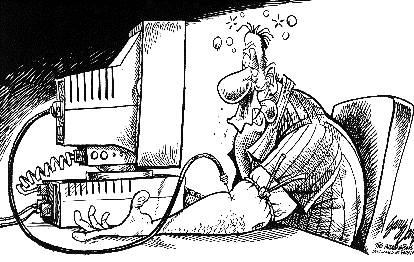
The person gradually incorporates a virtual personality, and begins living a life independent from his own reality offline, in many cases, annihilating the latter with maladaptive behavior and estrangement. According to various studies, CR addiction, and its related implications have started to be a subject for concerns by many psychologists. The pattern of behavior – among people who frequently engage in CR activity – has been identified as leading to a series of increasing symptoms which imprisons the person in a sort of obsessive-compulsive state of mind. What started as a positive forum for social experience became an escalating generator for mental disorders. The frequency the person visits CR and the time spent chatting will serve as the basis to classify the addiction.
The psychological phenomenon of CR addiction can clearly place this cyber tool in the list of other nefarious entities such as drugs, alcohol, gambling and sex. But, isn’t the individual free to establish the intensity of the relationship with the elements of the objective world? What prompts someone towards the excess, the abuse? What major role does our society and culture play in facilitating our entanglements? How can we know when we are becoming addicted to something? What are we missing from life?
An addiction always points to a lack of some kind that the person struggles to fulfill by covering it up with something that brings pleasure. In the case of the CR, the basic motivator is a need for successful social interaction and intimacy with other humans. Deprived of positive emotional experiences in the real world, and – as citizens of our cyber times – we turn to our technological toys as a way to fill the cumbersome existential void. We set ourselves in a rut that sucks the spunk out of our lives, and forces us to yearn for that gleam of freedom, which is the natural aptitude in the human spirit still breathing life into our automated bodies.
Psychological studies are still scarce in the field of cyber societies. The few studies available, interestingly enough, indicate maladaptive behavioral symptoms that aggravate towards addiction and obsessive-compulsive disorders. Another interesting aspect of online activity, the studies show, is that it is often related to sex. We could actually say that its presence on the internet marks the paroxysm of prostitution and pornography. Our old brothels entered the 21st century and claimed their cyber status. The studies show an alarming number: “At least 200,000 US internet users are hooked on porn sites or X-rated chat rooms, researchers have found”. The information appears on the website of BBC News online, and was based on a study published in the journal “Sexual Addiction and Compulsivity, in March 2000. The number is likely to have increased since three years ago.
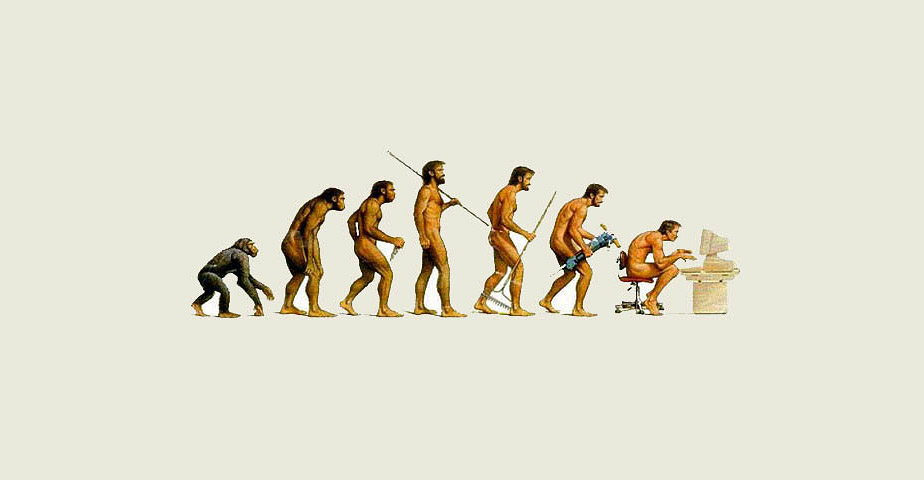
Our society has reached impressive levels of technological evolution. Complex surgeries are done routinely in the hospitals through miniscule incisions monitored by state-of-the-art equipments; News and information are globally transmitted with real time precision; cell phones, digital sound, magnetic resonance imaging, satellites, you name it. On a materialistic perspective, our lives couldn’t get any better. Yet, another technological gadget will come along to fill the gap we haven’t thought about. No more need to wait around for something we don’t have. It’s practical and fast. It thinks for us. The pace of life in the age of technology is so increasingly fast that makes us take our concrete reality for granted. The richness in precision and detail leaves the unpredictability of life out of the picture. Are we expected to employ the same pragmatic system in search of an understanding of our minds? Unfortunately, when we enter in contact with the objects of our creation, a lot more than the mere push of a button is involved.
In the concocted world of the chat rooms, the ontological void is seemingly fulfilled in a psychological environment conducive to pathological behavior. Isolated in the concrete social space, and fraught with the tension that real social interaction begets, the person is drawn to the enticing anonymity of net encounters. Sitting at the computer and talking to the world purveys a sense of power, control and prestige. Everyone curiously reads the life fabrications of the others. You become the author of your profile. You can rewrite the aspects you don’t like about your life. You can present a new portrait of yourself, an efficient “avatar” (in cyberpunk terms) tailored to your whims. We can wear as many masks as the scenes require. We can hide our identities, tell embarrassing secrets, act out our fantasies, and reveal the shadow of our souls. All this we can do without compromising our image to the world. We entered a new sphere and adopted one or multiple virtual personalities.
There is – in the confines of the CR – a high degree of permissiveness that enables the person to relax and let go of censorship. Cybernauts of age groups ranging from 18 to 90 are attracted to erotic conversations on the net. An intriguing nomenclature came to life to discuss the phenomenon: “Cyberinfidelity”, “Cyberaffair”, “Cyberlover”, “Cybersex”. The dichotomy existing in these words points out to the root of the problem. The words imply an actual social activity within the domains of the cyber world, where the participants don’t have physical contact with each other. The permissiveness and anonymity prevalent on the CR are decisive ingredients that cause the person to repeat the experience.
All this activity may seem harmless at first glance. However, when we take a closer look, and consider the big picture, we start to see when the internet, or the CR, becomes a mental hazard in the hands of people who experience anxiety, depression, low self-esteem, and inadequacy toward social relationships. CR will provide a potent tool that will augment the isolation and trigger addictive behavior as the person tries to escape the feeling of guilt derived from the experience. Like with alcohol or narcotics, CR addiction undergoes the same cycle dynamics which incapacitates the individual from having conscious control over his instinctive drive. In “Imaginary Social Relationships”, John Caughey examines the fantasy attachments fans develop with their media idols. Coughey affirms: “In some ways fantasy relations are often better than real love relationships. Media figures are more attractive than ordinary mortals, and they are carefully packaged – through makeup, costuming, camera angles, and film editing – to appear even better.” (58) In a similar way, CR interaction is founded upon the fabricated personas of its members.
With such grim reality-inspired scenario, it’s hard not to feel helpless using the medium. We get the same feeling of helplessness in Judith Williamson’s “Urban Spaceman”, when she discusses the sociological implications of the inception of the walkman in our lives. “The walkman is a vivid symbol of our time. It provides a concrete image of alienation, suggesting an implicit hostility to, and isolation from, the environment in which it is worn. Yet it also embodies the underlying values of precisely the society which produces that alienation (…) individualism, privatization and choice.” (506) From all this, we understand that capitalism alienates the individuals, pushing the essence of what defines society out of the system. Expected behavior is easier to attend to and control. We live with the illusion of freedom, exercising our will within acceptable parameters of choice. While the walkman isolated the individual within the urban landscape, CR offers everyone a powerful social ersatz.
The entire framework of a cyberchat provides the subconscious with leeway of expression which is materialized through role-playing activities and fantasy. Perhaps this might be one of the reasons for the escalating number of cybersex. Free from the constraints of self-judgment and socially established censorship, the cyber personality assumes the command and acts out suppressed desires and instinctive impulses. There is an assorted volume of sexual options catered to each individual taste. Sex has always been a social barometer that indicates the levels of chaos and disorder in a system. Socially banned activities will proliferate in lustful chambers of the virtual bordellos on the net. Of all the many uses of relay chats, cybersex is sure a crowd pleaser. In an internet article published in the website of the Center for On-line Addiction (COLA) the statistics attest to the ongoing trend. The writer quotes an author: “There are an estimated 70,000 sex-related Web site with 200 new adult web sites that include pornography and interactive chat rooms being added per day (Swhartz, 1998).” Another passage in the same article reveals an interesting phenomenon that validates the idea of addiction: “Many people may automatically believe that the primary reinforcement of the online sexual act is the sexual gratification received from the experience. Studies have shown that sexual stimulation may initially be the reason to engage in cybersex, however, over time, the experience is reinforced through a type of drug “high” that provides an emotional or mental escape or an altered state of reality.” Why do people find it satisfying to engage in erotic interaction with strangers mediated by the computer? Obviously the natural social pressure has been eradicated from the experience. The person can play out pent-up desires that send them back to early stages of psychological regression in their pursuit of self-gratification. The addiction is intensified with the inevitable impact of the concrete world in total discrepancy with their mimetic virtual identities.
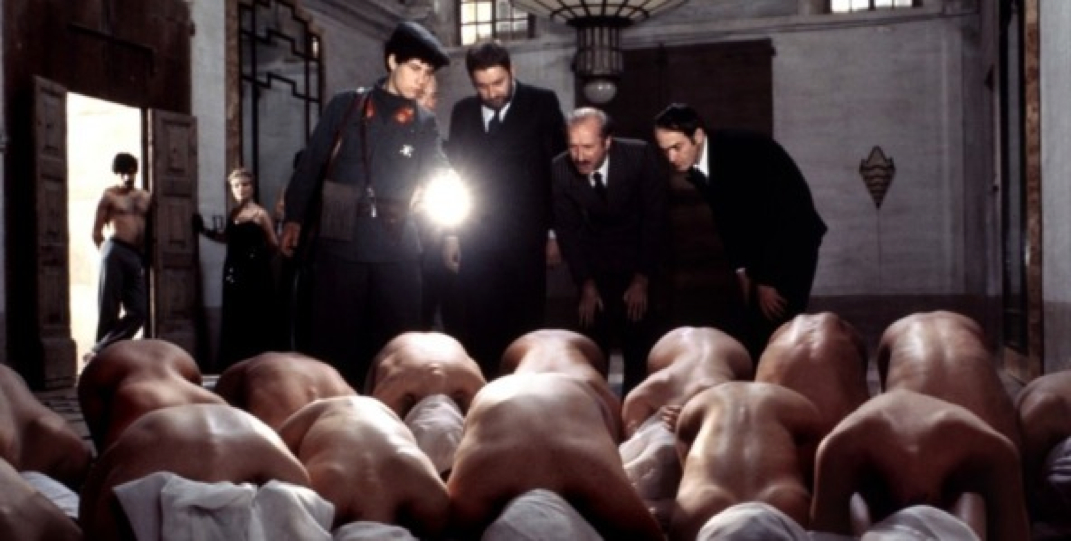
Online sex is in perfect synchrony with a culture that engenders unethical ideologies to cash in on our instinctive nature. We only have to look at advertisements, movies, the entire media, and the hodge-podge of methods used to alienate the masses by offering an illusion of freedom and choice. In the harrowing movie “Salò, 120 Days of Sodoma”, Italian filmmaker Pier Paolo Pasolini creates a horrifying tale, set in the Mussolini era, replete with intense sexual aberrations like coprophilia. The film shocked catholic Italy, and caused an overall uproar. The underlining intention of the filmmaker, however, was to portray the quality of life of those living under the forces of capitalism. We can only shake in terror in face of such saprophytic society.
The treatment for CR addiction – or any other addiction for that matter – involves acceptance and gradual awareness of our relationship with the object of our obsession. Treatment for social dysfunction should rely on our understanding of the elements at play in our times. Man’s creations should come to life to assuage our condition on this planet, not to cause us ruin, bankruptcy and distress. Let’s not blame the wine for our intoxication. Excess is the cause of addiction, a natural state of imbalance. Life exists outside the computer. We can decide to turn the machine off for a while, and try and recapture the innocence of living. And that brings us back to the Burning Man experience. Perhaps the very reasons for the occurrence of the “temporary autonomous zones” are that humanity needs to dive into the ocean of chaos, now and then, to find out about the rules that govern their lives. Are such rules representing our most sacred ideals and beliefs? In a world devoid of the controlling eye of the State, each person becomes responsible for the welfare of the group. It’s surely a utopia to dream about lawless societies reminiscent of ancient times when there were still uncharted territories on the globe. The El Dorado now lives only as an archetypical seed in our hearts. Within the muddled context of our times, authoritarianism and domination seep through the minute cracks of our psyche. Under such condition, it is necessary a colossal effort on our part to discover what truly represents our tastes, opinions and convictions. In the apparent reality of the system, language and form are manipulative tools to induce us into a state of social anesthesia and conformity. It is, thus, that we support the same dominant values and codes we abhor. After all, the concept of freedom is never an absolute practice.
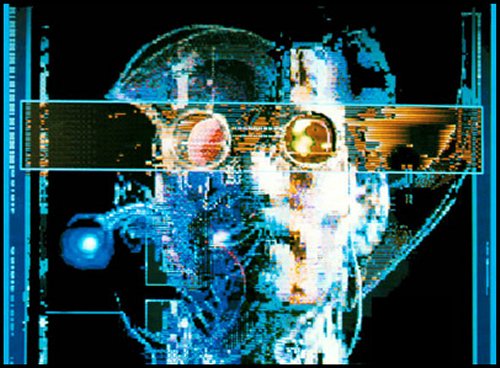
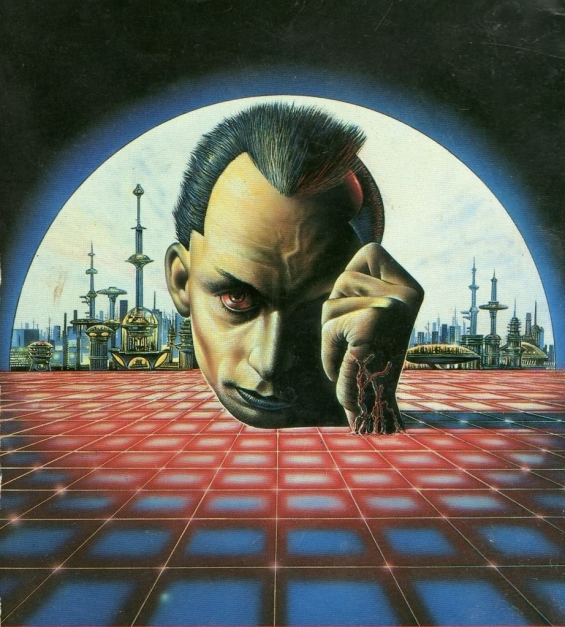
Are we going to wake up one day like Gregor Samsa in Franz Kafka’s “Metamorphosis”? Are we doomed to live our lives and have a similar negative fate like that of the dystopian social universe William Gibson envisaged in his 1984 novel “Neuromancer”? Are we running towards the downfall of our civilization? These are difficult questions to answer. Sometimes, however, our downfall could be just one click away.
Bey, Hakim. T.A.Z. The Temporary Autonomous Zone. 2nd Edition. Brooklyn, NY: Autonomedia, 1991.
BBC News Online . 200,000 net porn addicts in the US. 2 March, 2000. BBC News Online. 11 Apr. 2003
Caughey, John. “Imaginary Social Relationships”. Media Journal: reading and writing about popular culture . Eds. Joseph Harris, Jay Rosen and Gary Calpas. 2nd ed. Needham Heights, MA: Allyn & Bacon, 1999.
Center For On-line Addiction. What is Cybersexual Addiction? Center For On-line Addiction, A Subsidiary for ebehavior. 11 Apr. 2003 <http://www.netaddiction.com/ cybersexual_addiction.htm>
Williamson, Judith, “Urban Spaceman” . Media Journal: reading and writing about popular culture . Eds. Joseph Harris, Jay Rosen and Gary Calpas. 2nd ed. Needham Heights, MA: Allyn & Bacon, 1999.
It’s funny but I have this feeling that talking about love gives us the experience of a coveted, yet elusive, state that resides somewhere off yonder, way far from my reach.
Words are peculiar instruments that once probed too much, lack the meaning we attach to them. It’s like talking about GOD or ENLIGHTMENT – these words only serve as pointers to an experience that is never conclusive or authoritative. Many of us have played with words by repeating a word so many times that soon we can no longer feel the connection between the real experience and the word it describes.
Such is the illusion of language as a distinct and arbitrary object, and as an abstract entity communicating ideas; it often creates a rift between these two independent worlds.
LOVE, in my experience, is the principle of creation, the whole creative energy encompassing all human experience. It is the kind of energy that transforms and melts any other energy into positive possibilities – possibilities of creation, possibilities of change.
Feeling LOVE is being willing to be open to accept all incongruities, contradictions and disparities in our emotional landscape. It is being able to embrace fear, anger, sadness, confusion, despair, joy, compassion and pleasure as vital occurrences in our lives. Embracing the vast range of feelings and emotions is the key to allowing the energy of LOVE to manifest in all its healing power.
To me, LOVE is not some obscure or far-fetched phenomenon granted to a few privileged beings. It is our very existence at every moment. It is joy and compassion, but also anger, fear and pain. It is the range of emotions and my relation to them. If I deny or ignore my fears and confusion, how am I going to be able to have a glimpse of understanding into the universe of another being? If LIFE is about change, what would be “that” which is intrinsic to life and undergoes any process of change, but remains unchanged?
It seems to me that I must first accept myself unconditionally in order to experience LOVE in all its unexpected forms. It is never through limiting and constricting, but rather through openness and expansion.
The mind is a very tricky organism. It can easily make us prisoners of fixed ideas and lofty moral standards we defend at any cost. We soon forget that LIFE happens independently of our concepts and our attempts to fit it in some magic formula that can be administered to everyone. That is why judging a given reality, someone’s behavior, opinions or beliefs will invariably lead us to a distorted construction of the complex experience of the manifestation of life. The mind is never impartial, and obeys to individual acquired schemes that categorize a foreign or unknown event or reality according to its epistemological history.
I firmly agree with the idea that there are as many realities as there are thinking minds. Nothing is absolute or conclusive; therefore we should always be open to a positive pluralism of interpretation when faced with the mosaic of life’s experiences and expressions.
The human experience is about relationship.
The minute we are conceived we are involved in some kind of relationship. As we move through life we go through a series of relationships: relationship to our family, environment, objects, work, food, etc. It is also part of our process to undergo different levels of conditioning. Our behavior, attitude, beliefs are all conditioned by an infinite array of external elements that impose themselves on us through social institutions such as education, religion and family. As we think about all this, we start to realize that freedom is actually a far cry from our inner urge to rebel. Freedom will slowly be revealed as the responsibility to understand the entanglements we are subjected to and the ways to unravel the spirit in our quest to discover our self. We yearn for union and the collapse of the ego, but it is through our individual differences that we will attain this goal. It is like looking at a gigantic jigsaw puzzle, and seeing that each piece will contain the vision of the whole.
In a romantic relationship we often lose touch with the core of who we are, melting, therefore, into the universe of the other, then we flail our arms and struggle for fear of losing the identities we’ve created for ourselves. Since losing an identity is a form of death, dying is imperative to renewal and growth.
Many times, I have a feeling I know nothing about LOVE, and, then, I feel its power all around. It is volatile and yet its energy lingers in the air we breathe.
When in doubt, I close my eyes and surrender to its music, trusting, that, somehow, my body will create its own dance.
Alfred Doeblin’s poignant novel must have impressed Fassbinder deeply. In an interview talking about his episodic masterpiece, Fassbinder announces, rather matter-of-factly, that writing the script was not difficult because he pretty much knew the book “by heart”. And, indeed, we should take his words literally, considering the extent of the work and the cinematic achievement it represents.
Berlin Alexanderplatz is not an easy film to watch; not because of some artistic imperfection. On the contrary, because it is a dense and tortuous, but honest, observation of the human condition, its contradictions and dark nature. Fassbinder approached this project with an open heart and a razor-sharp discipline. He knew what he wanted to recreate, and the world he conjured up captures our attention by tearing away any romanticized notion of reality.
The story takes place in Berlin around the years of 1926 and 1928: Germany, at the brink of one of the darkest periods of human existence. A universe breathing betrayal at a cellular level. Murder, jealousy, perversity, hatred, maliciousness, innocence, fragility, fear, longing, guilt, embarrassment, lack of hope, evil, passion, lust, doubt, indecision, suffering, pain, sex, death, blood, insecurity, poverty, uncertainty, madness, hell, despair, surrender, shock, chaos, dirt, soul, faith, and the constant presence of the Shadow of the human Psyche and our intrinsic Divinity.
The story is told in thirteen parts and an epilogue. It is a long cinematic experience. Mr. Fassbinder acts as a sort of Brechtian observer with a soft spot on his heart. The first part runs around 82 minutes. The next twelve which follow are about an hour-long each. The last is the epilogue that is 112 minutes of an odyssey into madness and the surreal visions of the Unconscious. This last part plays like a roller-coaster ride through the past, the present and the future as we exchange empiric data in order to survive. It’s a spiral descent into hell. Dante’s inferno is revealed in every corner.
The main character in this story is Franz Bieberkopf. He re-enters the world after a four-year sentence in the Prison of Tegel. His crime: killing his girlfriend in a fit of anger and despair. He is the anti-hero we make acquaintance with, the Nietzschean Superman in anguish. Our limitations and awe. In times of terror the arrows flow amply.
Doeblin’s complex narrative and Rainer’s impeccable rendition outlive their creative minds. The parallels can be tracked into our times. We can only hope we have learned some lessons.
The Weimar Republic was created after WWI in an attempt to establish Germany as a liberal democracy. It failed with the ascent of Adolf Hitler to power, and with the formation of the Nazi party. In 1933, the Third Reich takes over. Doeblin’s narrative takes place in the last years of the Weimar Republic.
Berlin Alexanderplatz is a phenomenal work of art that needs to be absorbed slowly. Fassbinder’s work offers the viewer a similar involvement to reading the book. We get to spend more time with the characters and their settings.
I watched one episode per day on average, but there were times I watched two on the same day. I also took breaks over the weekends, accommodating my schedule and my mood.
This is undoubtedly a remarkable cinematic experience!

 Just picture yourself sitting by the fireplace, sipping a hot cocoa with your family, listening to those timeless classic Christmas carols while enjoying the warmth and comfort of your beautifully decorated house. The tree sparkles with the lights, and the sweet aromas of apple, cinnamon, cloves and oranges permeate the air from all the scented candles and fragrant potpourri you carefully selected for the occasion. The presents are laid out around the tree, and the table is set up for a nice supper. It is Christmas.
 The power of music, every so often, astonishes me in its capacity to make us transcend reality and pull us into the depths of our souls, our inner world.



 Matisse was born in 1869 and died at the age of 84, leaving a body of work which both shaped and changed the history of art. Despite his conservative appearance, Matisse fully incorporated the modern spirit of the new century. In his anguished but unwavering quest, the artist understood the use of light and color and went beyond simplistic representations of reality, making use of color to express a state of mind towards his subject, celebrating life and the joy found in nature and painting.

 It’s 5:30 on a wet Friday afternoon in spring. I’ve been driving around in the parking lot of the Stonestown Shopping Center for about four minutes, looking for an empty space. This is my second mall visit on a list of three. Yesterday, I hung out for a while at the San Francisco Shopping Center on Market Street. The Serramonte mall will be my next stop. Casinos and shopping centers have always given me a headache by the time I was ready to leave. But that didn’t stop me from having my share of visits in the past. The very essence of the mall gives its natural raison d’être. The place is a shopping compound, a community market, a year-round fair where the inhabitants of a city, town or village congregate for a social experience. Since the days of yore, markets and fairs have provided their members both with products for purchase or exchange, and an environment for social interaction and entertainment. For this reason, the mall today fulfills its ancestral purpose within the landscape of the culture and the economical system that originated it.
 I had never seen George Romero’s 1978 classic “Dawn of the Dead” before, but as a movie buff, I couldn’t let go of the opportunity. The movie is more like a sociological sci-fi piece. Throughout, Romero sews in his social statements about consumerism and individual alienation. The corny treatment to the movie, places it in the cult genre. Like Barbarella, fighting Duran Duran to save the universe from evil in Roger Vadim’s kitsch scenario, George Romero paints these odd tableaux that play like a tragicomedy in front of our entertained eyes.
 Roaming the mall, I soon let myself be lured by the artifice, the trick, the lie. I entered the movie stores and examined the titles. I ended up purchasing two movies for myself. Interestingly, when I approached the cash register to pay for the articles, the clerk asked me fast-paced, memorized questions about membership to the store, services, and if I wanted to earn a free one-year subscription to Entertainment Weekly magazine. It’s all about sales – how much more revealing can that be? All the other movie/cd stores were basically the same. There is no paucity of the mainstream, blockbuster Hollywood fare. Some classic items like “The Cabinet of Dr. Caligari” – a 1919 film by German filmmaker Robert Wiene – can surprisingly be found on the shelves. This movie was made under the aesthetic orientation of the expressionist movement in the arts and literature in vogue in Europe at that time. We should never underestimate the odd places where art may proliferate within a capitalist system. Everything can be appropriated and turned into a product. The good news are: in the domain of the mall, classic pieces like the one above is usually ¼ of its price, but the number of such items is definitely irrelevant in the context of the big picture. The star is still the big productions, and the merchandise tagged along to entertain our lives.




 The person gradually incorporates a virtual personality, and begins living a life independent from his own reality offline, in many cases, annihilating the latter with maladaptive behavior and estrangement. According to various studies, CR addiction, and its related implications have started to be a subject for concerns by many psychologists. The pattern of behavior – among people who frequently engage in CR activity – has been identified as leading to a series of increasing symptoms which imprisons the person in a sort of obsessive-compulsive state of mind. What started as a positive forum for social experience became an escalating generator for mental disorders. The frequency the person visits CR and the time spent chatting will serve as the basis to classify the addiction.
 The psychological phenomenon of CR addiction can clearly place this cyber tool in the list of other nefarious entities such as drugs, alcohol, gambling and sex. But, isn’t the individual free to establish the intensity of the relationship with the elements of the objective world? What prompts someone towards the excess, the abuse? What major role does our society and culture play in facilitating our entanglements? How can we know when we are becoming addicted to something? What are we missing from life?
 An addiction always points to a lack of some kind that the person struggles to fulfill by covering it up with something that brings pleasure. In the case of the CR, the basic motivator is a need for successful social interaction and intimacy with other humans. Deprived of positive emotional experiences in the real world, and – as citizens of our cyber times – we turn to our technological toys as a way to fill the cumbersome existential void. We set ourselves in a rut that sucks the spunk out of our lives, and forces us to yearn for that gleam of freedom, which is the natural aptitude in the human spirit still breathing life into our automated bodies.







 ANSHAM FOR ME